
Regulatory Deterrence in Live Export
Anticipatory Governance • Institutional Power • Institutional Systems Architecture
Diagnosing the collapse of regulatory credibility in a $912 million trade and re-engineering enforcement architecture to restore deterrence as a structural function.
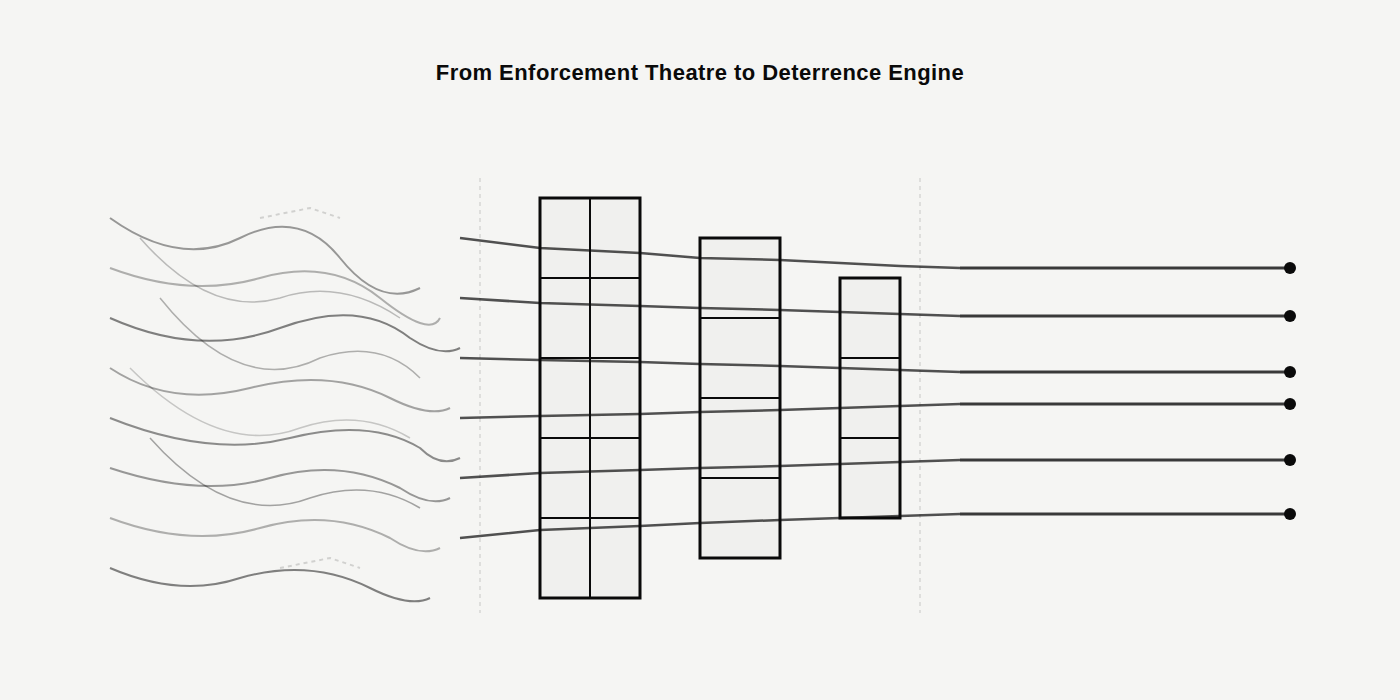
The Structural Condition
By 2022, the Australian live animal export industry, a $912 million trade, was operating under regulatory architecture that was comprehensive in legislation and hollow at the enforcement layer. The inspection regime followed static patterns. Exporters optimised for the published document checklist, creating a veneer of compliance across the inspected surface. Systemic risks accumulated in every area the inspection framework did not reach.
Enforcement operated on a binary: ineffective administrative conditions at one end, full licence suspension at the other, with no graduated response between them. This produced regulatory paralysis, particularly with operators large enough that suspension threatened the trade itself. The regulator had no real-time visibility over conditions at sea. Decisions relied on subjective reports from industry-paid veterinarians. The data architecture required for independent oversight had never been built.
The cumulative effect was the legislated termination of the live sheep sea trade, a $44 million loss. The political system intervened because the regulatory architecture could not demonstrate the credibility required to sustain the trade's social licence.
THE ENGAGEMENT
Client: Department of Agriculture, Fisheries and Forestry (DAFF)
Role: Principal Institutional Architect, Regulatory Systems Transformation
Scope: End-to-end redesign of enforcement architecture, spanning a proportionate sanctions model, randomised inspection protocols, and real-time monitoring implementation roadmaps.
THE DIAGNOSTIC
The system had been designed around compliance management. Deterrence had never been engineered into the architecture. The operating assumption was that exporters would self-regulate if provided with a checklist. In a $912 million international trade, this produced a race to the bottom. Inspection patterns were predictable. Consequences for failure lacked credibility.
The Architectural Intervention
The recommendations embedded two structural principles into the enforcement architecture: uncertainty and proportionality. Together they reconstituted deterrence as an operational function of the regulatory system.
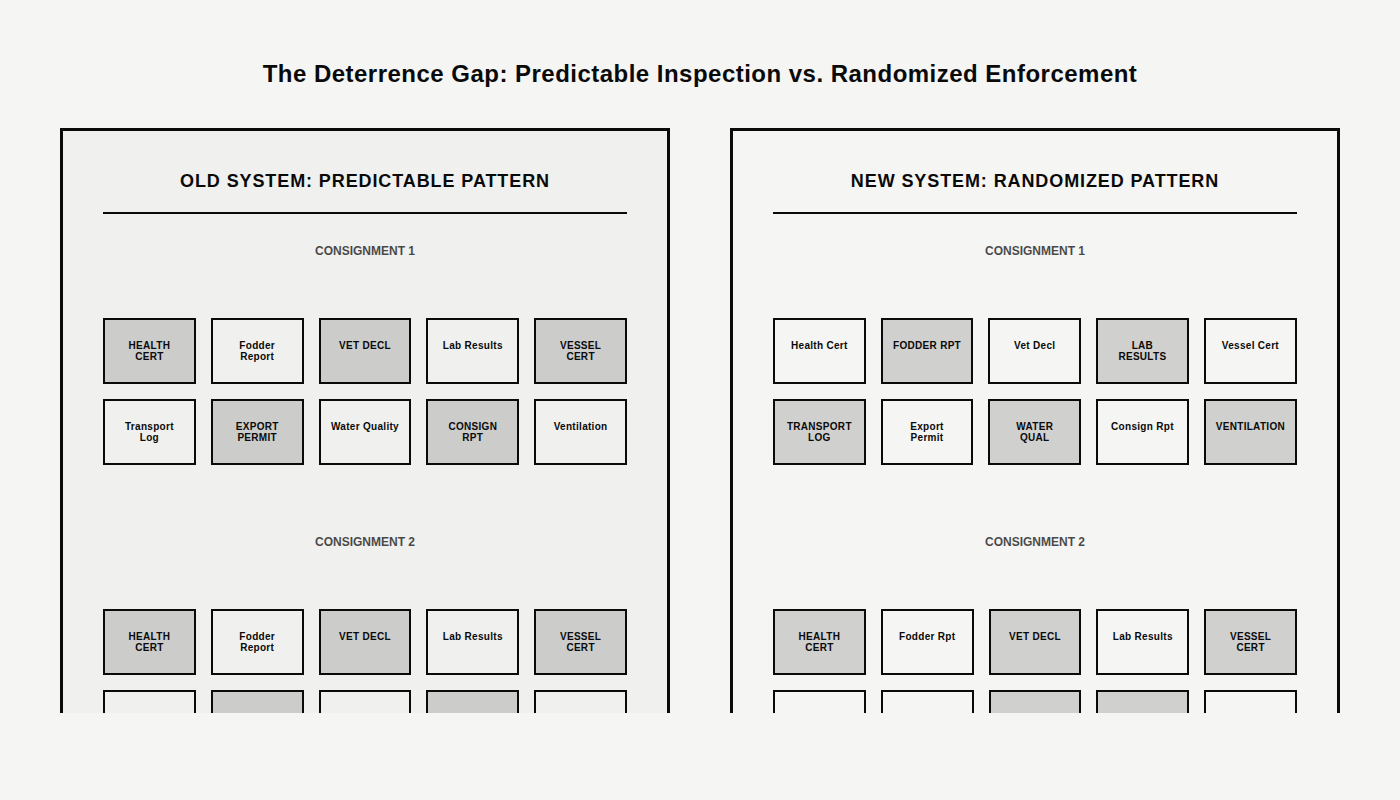
Randomised Full Document Checks
The predictable document checklist was replaced with a probabilistic audit engine at the export permit stage. Any document in the consignment can now be selected for deep verification. The cost of misalignment applies to every data point across the entire operation. Compliance becomes a permanent operating condition because the exporter cannot know what will be examined.
The Proportionate Response Model
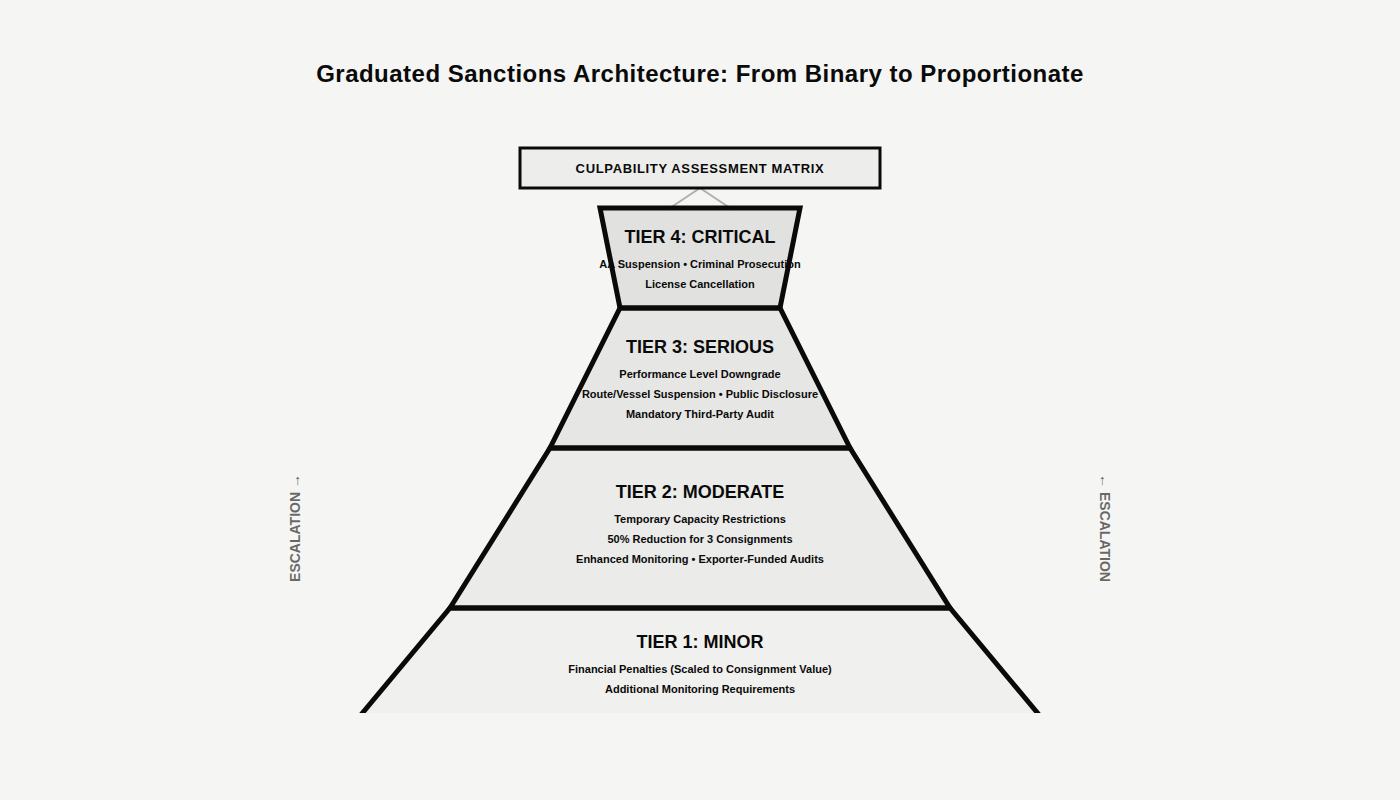
A graduated sanctions matrix calibrated to culpability and systemic risk across the full severity spectrum.
Tier 1, Minor: Scaled financial penalties. Increased mandatory reporting.
Tier 2, Moderate: Temporary capacity restrictions (e.g. 50% load reduction). Mandatory third-party audits.
Tier 3, Serious: Performance level downgrade. Suspension of specific routes. Public disclosure.
Tier 4, Critical: Immediate AA suspension. Referral for criminal prosecution. Permanent licence cancellation.
The Critical Lever
Regulatory predictability was the single largest structural vulnerability in the existing architecture. Once inspections became randomised and sanctions graduated across four tiers of severity, the cost-benefit calculation for every consignment shifted permanently. Non-compliance now carries risk proportionate to the value of the trade itself.
OUTCOMES
Randomised document checks are now operational across all export permits. Pilot data shows a 34% increase in the detection of documentation deficiencies. Exporter investment in vessel ventilation upgrades and welfare training has increased measurably, indicating that compliance behaviour is shifting toward genuine risk ownership across the industry. Pilot data indicates a 41% reduction in repeat violations among exporters subject to Tier 2 sanctions compared to historical administrative warnings.
Required Next Steps
Legislative entrenchment of the randomised inspection authority is required to prevent regulatory reversal and protect the remaining cattle and goat trades from the social licence failures that ended the sheep trade.