
ENGINEERING
the Substructure
of Sovereign Resilience
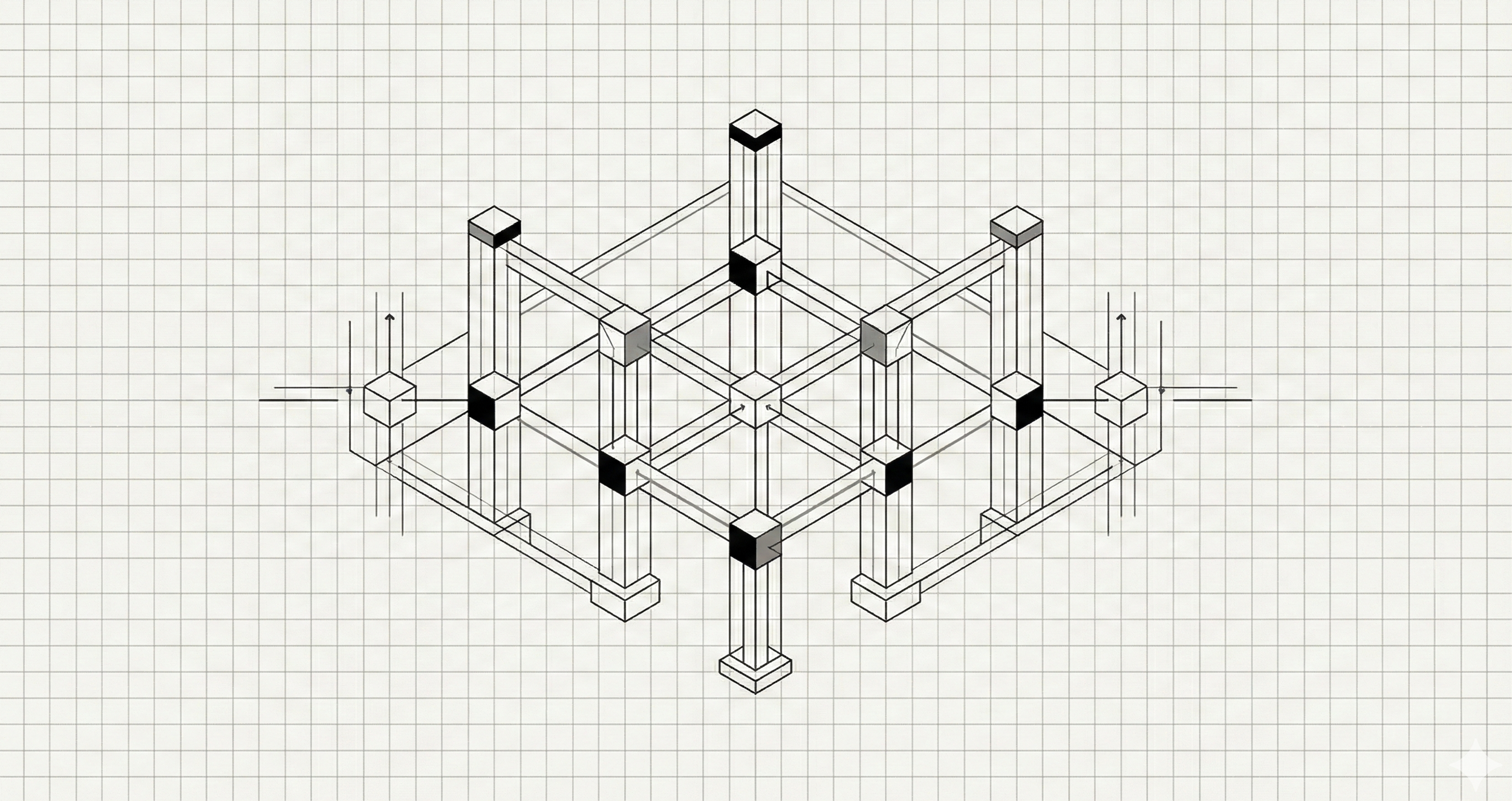
Path Dependency locks institutions inside failing architectures long after the cost of staying has exceeded the cost of exit. Didda Futures re-engineers the foundational systems architecture that sovereign institutions require to function under pressure and hold across political cycles.
Governance is failing by design
Institutional failure is architectural.
The hidden wiring of policy, data, and execution was designed for conditions that no longer exist, and the cost of maintaining that misalignment compounds silently across every budget cycle. Billions in public capital are absorbed by structures running for a world that has passed.
The Fragility Gap between what institutions report and what they can actually withstand widens long before it becomes visible. Structural correction begins at the layer where founding assumptions are embedded and are compounding without scrutiny.
The Five Lenses of PoweR
Structural diagnosis requires examining an institution through five simultaneous frames. Each lens isolates a different load-bearing condition. Together, they reveal where the architecture holds and where Structural Drift has already begun.
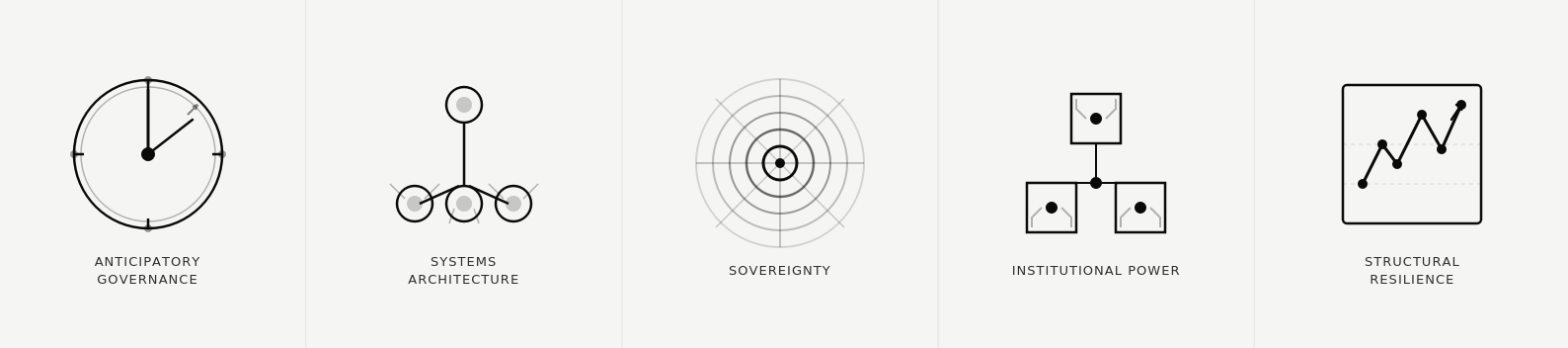
Anticipatory Governance: Architecting institutional intelligence to detect structural drift and trigger corrective action before the crisis curve arrives.
Institutional Systems Architecture: Designing interoperable, modular frameworks that eliminate single points of failure.
Sovereignty: Hardening the capacity to act with absolute strategic autonomy.
Institutional Power: Minimising the distance between strategic intent and kinetic execution.
Structural Resilience: Engineering immune systems that maintain function under compound pressure.
Audit. Re-engineer. Harden.
MAP
Structural diagnosis begins with making the architecture visible. Network maps, process maps, and dependency maps surface the root pathologies, the coupling points, and the leverage positions that standard reporting cannot reach.
Stress-test
Stress-testing surfaces where institutional knowledge has concentrated into single points of failure, where capacity has thinned below operational viability, and where Sovereignty Leak has transferred capability the institution depends on to parties whose interests are not aligned with its mandate.
Rebuild
Strategy, structure, process, infrastructure, talent, and incentive architecture are realigned to the conditions the Substratum — the physical and demographic foundation beneath all institutional architecture — can actually support. An institution rebuilt at this layer carries load across political cycles, economic shocks, and the compound pressure that Surface-level reform cannot.